
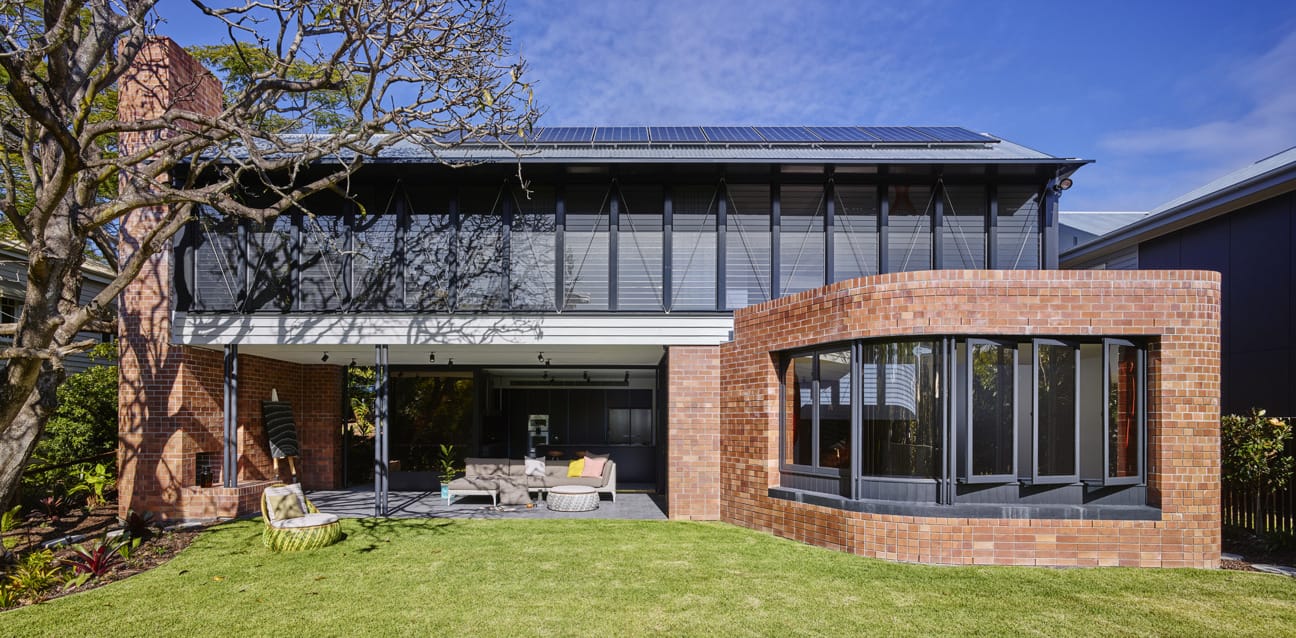
As our population grows and our cities expand, more and more new homes and residential communities are being built near bushland or national parks.
For new home buyers building in new developments on the outskirts of our capital cities, this means that the risk of bushfires needs to be considered when choosing your building materials. Not all building materials are created equal. Building your new home with brick could help protect your home and family in the event of a bushfire.
Why bricks can withstand fire
Bricks are made from clay, which is fired at around 1,000° Celsius to form the hardened finished product. Because of its makeup brick is deemed a non-combustible building material in accordance with the National Construction Code (NCC). This means that well-designed and constructed brick walls have an inherently high level of fire resistance when exposed to the extremely high temperatures and flames of a bushfire.
With this in mind, let's take a closer look at how building with brick can increase your home's resistance to the risk of structural damage caused by bushfires.
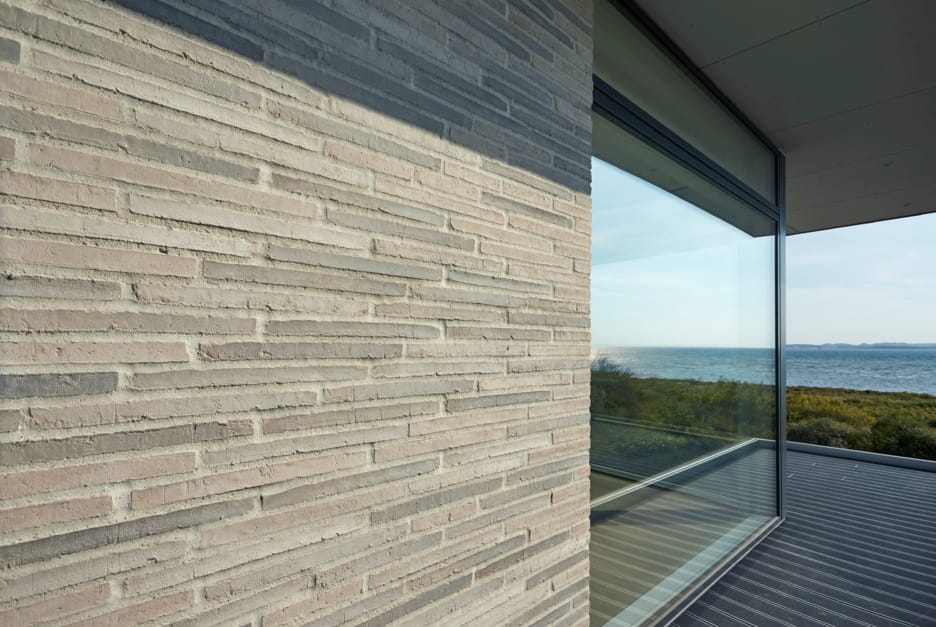
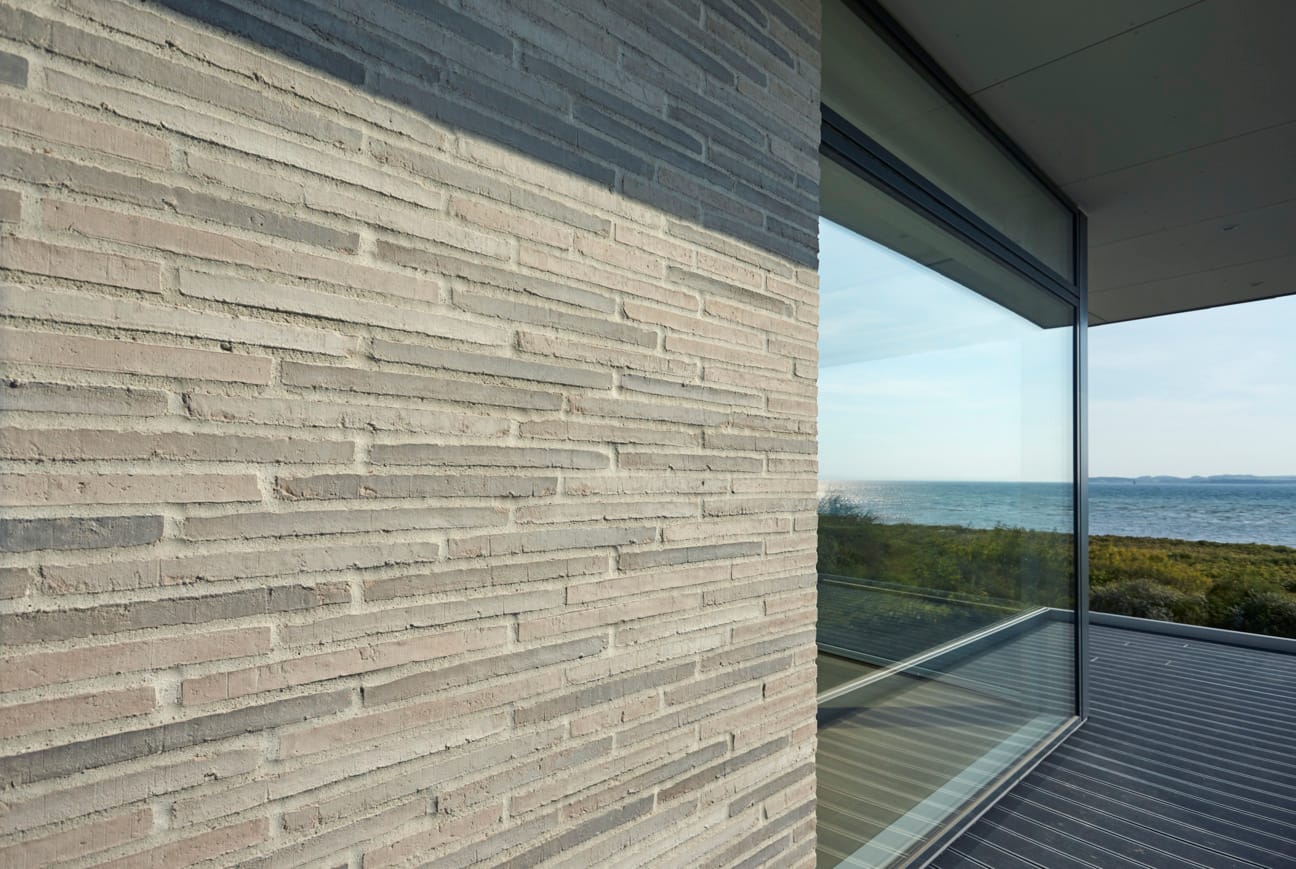
What you need to know when building in bushfire prone areas
The National Construction Code (NCC) sets the Australian standards and requirements for construction in Australia. It requires that clay masonry walls be designed and constructed following Australian Standard (AS) 3700 'Masonry Structures' and that in bushfire-prone areas, buildings be constructed following AS 3959 'Construction in bushfire prone areas'.
What are fire resistance levels?
Fire resistance levels (FRLs) provides a rating (in minutes) in which a certain construction system will last in terms of structural adequacy, integrity and insulation. This allows us to predict the ability of a wall to maintain its strength during fire and to resist the spread of the fire.
The NCC requires that certain walls must meet a specified FRL based on application.
The purpose of a wall having a high FRL is to:
- provide sufficient evacuation time in case of fire,
- prevent flame and hot gasses from spreading,
- allow for firefighting efforts, and
- minimize property damage.
The FRL for masonry, including clay bricks, can be determined by following calculations set out by AS 3700 'Masonry Structures' Section 6 or through testing in accordance with AS 1530 Part 4.
PGH Bricks & Pavers' clay bricks are all purpose-built to comply with the FRL Insulation requirements determined in AS 3700. Also, with clay brick being non-combustible, the clay brick wall is more likely to remain intact after a fire.
What are bushfire attack levels?
When building in bushfire-prone areas, under AS 3959 the severity of the building's predisposition to ember attack is expressed as a Bushfire Attack Level (BAL), with Flame Zone (BAL-FZ) being the most severe and having the highest requirements.
BAL is determined by four key factors:
- the region where you live;
- the vegetation type around your property;
- the distance from your home to individual vegetation types; and
- the slope on the property.
When constructing in a BAL-FZ area, the external walls must have an FRL of 30 minutes. A properly designed and constructed clay brick wall provides greater safety and is also likely to remain intact afterward given its non-combustibility.
The non-combustibility of bricks
When clay bricks are produced, they are fired at temperatures as high as, or higher, than the extreme temperatures reached at the heart of a large bushfire. New clay bricks are in the kiln for longer than it takes for the front of a bushfire to pass a given point.
So, it logically follows that bricks themselves are non-combustible. And this makes clay bricks the perfect choice for helping to protect your new home from structural damage caused by bushfires.
The CSIRO survey of houses in the Otway Ranges in Victoria that were exposed to the 1983 Ash Wednesday fires, showed that masonry walls significantly reduced the chances of a house being destroyed by bushfire.
Building your new home with brick also offers several other planning and design advantages. For example, full-brick construction helps keep houses cooler on warm days and may reduce the need for heating and cooling, reducing energy usage and bills, while at the same time minimising noise problems and maintenance costs.
For more information on the non-combustibility of brick and how to use it to protect against bushfires, see Think Brick Australia's Manual 5 and Manual 15.
Explore your brick options with PGH Bricks & Pavers
Are you considering building your new home with brick? If so, we invite you to explore your brick options with PGH Bricks & Pavers, an Australian leader in bricks.
* A number of state governments and organisations have online resources for building in a bushfire-prone area. For more advice, visit the NSW Rural Fire Service website, the Planning Victoria website, or the Queensland Government website.
Sign up to receive the PGH newsletter
Be in the know about future product releases, new products, events and trends.